Fibroid Tumour
Posted on June 10, 2011 by ARHC Ghana
By Dr Atta K.Bonsu
The name “afabo” (as the old Akan community called fibroid) was unpopular among the old African community. Though their population was less compared to our generation (which has been one of the popular excuses of our present dispensation), fibroids were unpopular and uncommon.
What Are Fibroids?
Fibroids are growths or tumours of the tissue, which are usually found inside the wall of the female genital system, especially in the womb or uterus. The one like fat like substances made of a mixture of muscle tissue from the uterus and threadlike fibres of connective tissue.
Unlike breast tumours that can generate the cancer, fibroid tumours are not cancerous. Though there are some reported cases of cancer involving long standing fibroids, it is very rare. Perhaps, out of a thousand cases of fibriod, only one could be involved with cancer.
Fibroids usually shrink after menopause, which makes a woman with fibroids to be flexible and make proper assessment and medication if necessary. Under normal circumstance, new fibroids do not develop before puberty or after menopause. If this is the fact, then it might have something to do with the hormone estrogen.
Statistically, it is estimated that fibroids occur in 2 or 3 of every 10 women. Especially, women between ages 35 and 50, though women even below 30 sometimes have fibroids. My personal observation is that young women in their 20s are seriously battling fibroids, which makes one to wonder the type of world that we live in―when young unmarried ladies are growing and nursing fibroids in their wombs.
Interestingly and sadly, most of these young women wake up, eat, dress up and move around nursing fibroids without knowing till symptoms appear. Some of the medical names given to the disease is leiomyoma, myoma, or fribromyoma.
Types of (Uterine) Fibroids
Fibroids grow in different parts of the uterus, and they are named according to which part of the uterus they are found. Chances of healing, childbearing and shrinking may also depend on the area of the womb that they are situated.
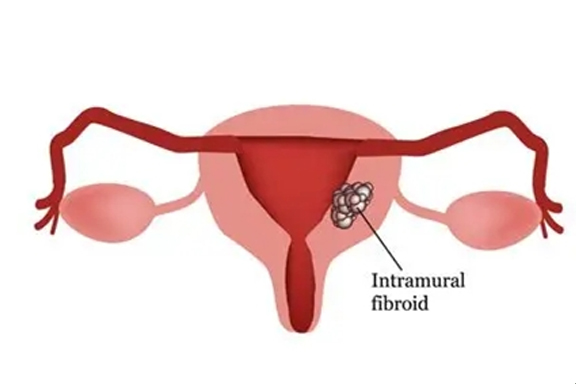
Fibroids that grow inside the wall of the uterus and found within the walls are called intramural fibroids, which by far is one of the most common types of fibroids.
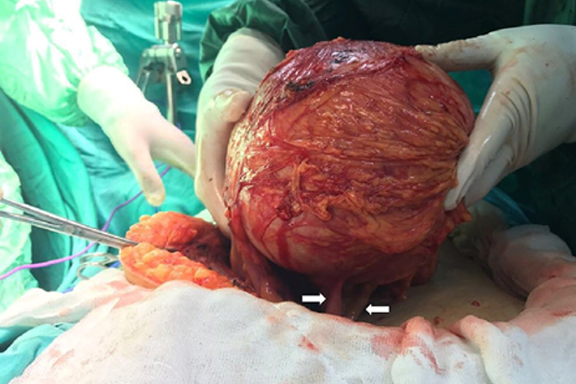
There are some of these fibroids that grow outward from the wall of the uterus into the abdominal cavity. This type of fibroid is called Subserous or Suberosal fibroids. (See picture).
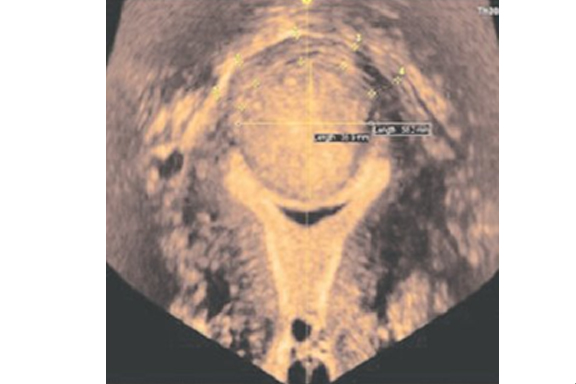
Those that grow inward from the uterine wall, taking up spaces outside the cavity of the uterus are called Submucous or Submucosal fibroids.
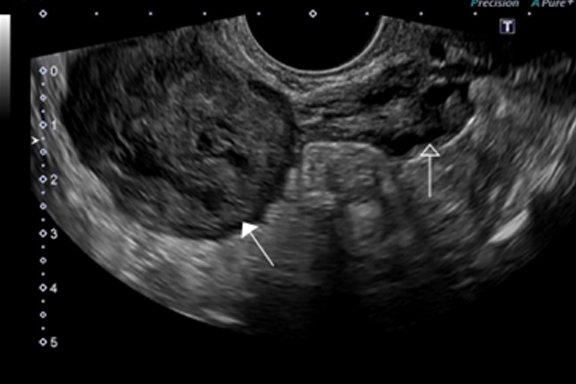
A fibroid that is attached to the uterus by a thick stalk is called pedunculated fibroid.
Symptoms of Fibroids
About one half of women living with fibroids do not know they have the growth. For many women fibroids cause no problem and they rarely show symptoms or any signs, until their doctors tell them so. The most common symptoms that usually show are:
- Pains around the pelvic.
- Scanty urination: as a result of much pressure on other organs, such as the bladder.
- Constipation too seems to be common due to the reason that the bowel (colon) are pressed upon by large fibroids.
- The most common symptom is heavy or excessive, long menstrual periods, with pains at times.
Causes of Fibroid
Scientists say that “causes of fibroids are not known”. Of course, fibroid tumours start as a simple muscle cell often in uterus and generates and grows big, even as the size of football. For scientists, the reasons are not known.
Significantly, comparing ages to ages, generations to generations, races to races and from a specific woman to the other, there could be a holistic understanding to the causes of fibroids. Why is it common in these days than the olden days? Why are they prevalent among the black race more than that of the whites or caucasians?
Changes in lifestyles―the way people eat, drink, dress and do our things have great contribution to this. In the old African home, our women were allowed to give birth to children, so naturally, as many as they could. There were no restrictions to this. We would recall the time when women were given births to as many as tens, twelves, fourteens and even seventeens. Those who do not know science properly believe, women risk their health when they give birth to many children.
Interestingly, it is just like the opposite, the more we restrict women from having less children, the weaker they become. The observations are clear, in the olden days that women lived naturally and gave birth to children so naturally there were no or a few cases of these fibroids and gynecological problems, compared to today that all sorts of practices are involved in childbearing.
There is no argument for this, if we really understand the science of reproductive hormones, especially that of estrogen. At puberty, the ovaries produce more hormones, especially estrogen. At higher levels it may favour the growth of fibroids. But in most cases we flatter ourselves, with annihilated thoughts that, exactly how this might happen is not understood”. And during menopause, when estrogen seems to be diminishing, fibroids shrink.
Here, heredity may also be another factor, but other woes of this generation is the artificial living that we have chosen. The greatest victims are Africans. Why? Comparing the rate of fibroids among the African Americans to that of the white Americans, the blacks are affected more―because western style of living do not favour them (the blacks).
During pregnancy the medicines that our women take, the food they eat, child delivery systems, contraceptives and family planning systems do not favour black people, so we find breast and cervical cancer, cysts, and fibroid cases, even among our young women.
There is vast difference between the land and the people of Europe and Africa. Geographical and climatic conditions can tell you more. The black African skin with much melanin is good for us living in this hot, tropical region. The white skin of Europeans are also suitable for their temperate region. There are some ways of living―medicines, foods and certain practices that may be good for white people which may not be good for black people.
Africans do not need tablets, pills, injections and vaccines but herbs and diet in their most natural forms as possible. Until we realize this and turn back to ours, there will be less sickness and death rate may drastically reduce. Comparatively, the black race look more different from the whites. Though all artificial lifestyles may not favour both races, yet the latter may subsist such practices more than the former.
For instance, A Whiteman can live in air-conditioning(artificial air) in Africa by causing less or no harm, but a Blackman risks his health in this condition, because the practice favours the Europeans climatic condition more than us living in this tropical, hot areas.
Africans suffer today from all types of diseases more than even Europeans and Americans, not because we are poor, as we are being told, but because we have adapted the Western type of living, which do not favour us due to many reasons. History will not permit us to go back to the 14th century when Europeans were sailing down to the African continent.
If we would go back to recall the events of those days, where African death rate was extremely low and the best of the globe, and compared to today where we die more than any group of people on the earth, tears may not be enough to control and console this stigma.
Not quite long, less than 40 years back, there were no or less recorded cases of cancer, hypertension, diabetes and these fibroids, but today that we have totally adapted this artificial lifestyle of living-especially introduction of chemical medicines, we are dying more than rats―even HIV/AIDS. Until we go back to that natural eating and medication, then there will be peace on the continent.
Who is Likely to Get Fibroids
These days, any woman of reproductive age can get fibroids. In the olden days, only mature women around their menopause had the disease, and even the disease naturally shrank after menopause. But, today, fibroids grow among women of all ages, even unmarried women and under 30s. As I have earlier said, there are many women living with fibroids without knowing, they only know when their doctors tell them, especially during marriage when they are looking for children.
Do Fibroids Affect Pregnancy?
There are different types of fibroid. The position, the size and the constitution of the victim’s blood would indicate weather she can bear children or not. The fact is, most women with fibroids have no trouble becoming pregnant, and their risk of a bad pregnancy or childbirth outcome is no higher. Especially, those who use natural treatment during pregnancy, while yet nursing the growths. In most cases, as the child grows the tumour also shrinks.
About 1 in every 5 women with fertility problems has fibroids, but these growths could be usually bystanders. That is to say, a woman’s inability to become pregnant has less to do with fibroids―they cause only about 2% to 3% of cases of infertility.
Fibroids that block one or both of the fallopian tubes may prevent spermatozoa from fertilizing the female sex cell (ova) when it is liberated into the fallopian tubes. Fibroids that grow and fill the entire uterine cavity may hinder the process of implantation of the newly fertilized egg.
Consequently, fibroids of this nature, especially those located in the cavity of the uterus may increase the chance of a miscarriage. And during childbirth, fibroids of this nature often increase the chance that the baby not positioned well to come out head first. In most cases, they increase pregnancy and delivery complications.
Fibroids and Placenta Abruption
A woman can take a whole of nine months to nurse a baby in the womb, but joy and happiness arrive when the woman safely gives birth to the unborn child. After childbirth, the afterbirth (placenta) separates from the uterus. That is to say, after the baby is born, the placenta needs to come out from the genital system. After this, without pains and excessive bleeding, then we say the woman had a safe childbirth.
Placenta Abruption, is a situation when the placenta separates itself and comes out from the uterus too quickly, before the baby is born. This happens in rare cases, in every 200 pregnancies, it occurs but once. This in many cases cut of the baby’s supply of nutrient and blood; and can threaten the baby’s life, and if care is not taken, death follows. Rarely do fibroids cause this Placenta Abruption.
Fibroids and Postpartum Hemorrhages
This is one of the fears of most pregnant women during childbirth. After childbirth, the placenta normally separates from the uterus. The muscle in the uterus usually squeezes the uterus to help stop bleeding when the placenta is separating from the womb.
When this is done, the uterus becomes feasible and the presence of fibroids in the uterus makes the squeezing of the muscle less effective, and in most cases the woman giving birth bleeds more. This is some of the reasons which make fibroid and pregnancy a bit scary, yet most women like this go through without difficulties. This may also depend on the size, position and the nature of the growth. Some fibroids grow during pregnancy, some remain the same while others shrink and disappear before even the child is born. This may depend on many factors, more especially the treatment that is involved.